

About a month before the 2016 presidential election, a picture circulated on the internet of a middle-aged female Trump supporter grinning wryly and wearing a handmade shirt giving Trump permission to grab her (in the pursuit of decency, I won’t say where). Continue reading “Not Feeling Stupid: The Root of Trump’s Resilience”
Category: psychology
The Glass is Mostly Full, but the Empty Part Hurts More than the Full Part Feels Good

According to recent research, we are more likely to use positive words than negative ones, exhibiting a “universal positivity bias.”1 Its not surprising that we would have evolved this way: making people feel good rather than bad is generally going to help your chances of finding someone willing to help you pass on your genes.2 Continue reading “The Glass is Mostly Full, but the Empty Part Hurts More than the Full Part Feels Good”
Just a Thought, But to be More Persuasive, You Might Want to Consider Speaking Like This
“I might be wrong about this, but…”
“I’m no expert, but…”
“Would we maybe be willing to consider doing it this way?”
“Does this make sense?”
Common wisdom1 suggests not only that that these types of phrases discredit you and undermine whatever point you are trying to make, but also that they are used more often by women than by men.
The only thing better than common wisdom is research, and the only thing better than research is research in the form of cleverly named academic articles, one of which confirms that women do use these qualifiers more often than men (though the gender language gap is surprisingly small). The evidence regarding whether disclaimers actually make you less persuasive, though, is far less black and white, and—like the disclaimers themselves—suggests shades of gray. Continue reading “Just a Thought, But to be More Persuasive, You Might Want to Consider Speaking Like This”
What Ted Cruz Misunderstands about Peer Pressure
Ted Cruz ran a smart campaign, but it wasn’t smart enough.
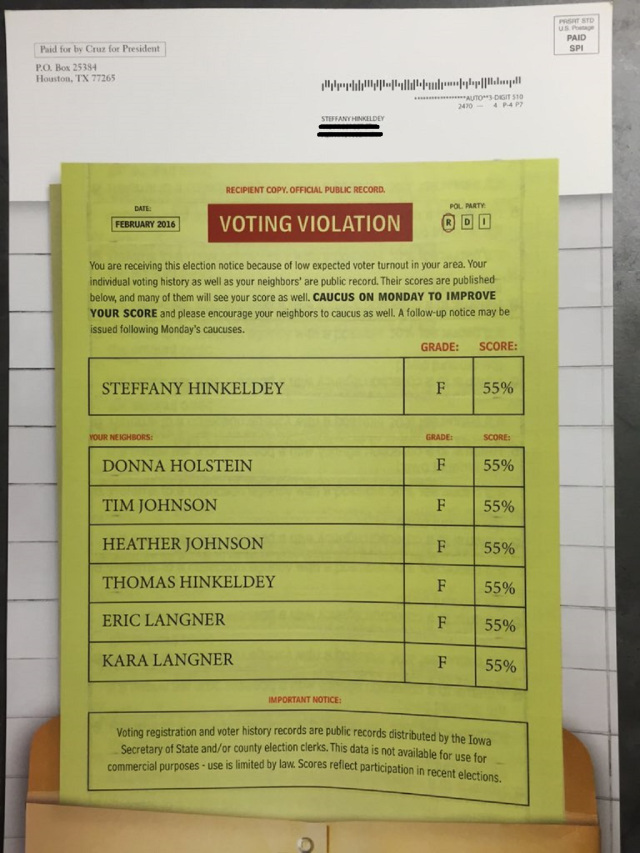
In the lead up to the Iowa Caucuses, presidential hopefuls use every trick in the book to turnout their supporters. Ted Cruz’s campaign took this to a new extreme recently by sending personalized “Voting Violation” letters to prospective voters that showed how they, and all their neighbors, had failing voter turnout scores.
Continue reading “What Ted Cruz Misunderstands about Peer Pressure”
Absence Makes the Heart Grow Hostile

The Biweekly Bias is a regular feature in which I describe a common—but little known—cognitive bias, speculate on its evolutionary underpinnings, and give some tips for how to use it to your advantage.
Biweekly Bias: Autistic Hostility
It turns out that the central recommendation Gwen Stefani made in the 1996 hit single, “Don’t Speak,” was not a very good one. Continue reading “Absence Makes the Heart Grow Hostile”
 Intersections