

Loyalty programs of all shapes and sizes have always left a bad taste in my mouth, but one type in particular makes me regurgitate vomit: airline loyalty programs. Continue reading “Frequent Flyer Programs Should be Grounded”
Category: behavioral economics
Using Behavioral Economics to Learn From Sam Hinkie’s Mistakes

Sam Hinkie’s resignation from 76ers GM via 13 page manifesto in 2016 didn’t lack for style (or for burying the lede, which he announced at the end of the first page). In the letter he explains to shareholders his philosophy on basketball and on life, citing a diverse group of business icons, scholars, and other luminaries, including: Continue reading “Using Behavioral Economics to Learn From Sam Hinkie’s Mistakes”
Decoding what Makes March Madness so Great

Without question March Madness is my favorite time of the year. I’m far from a die-hard college basketball fan, but a number of features of March Madness turn it from your run-of-the-mill postseason tournament into an earth-shattering spectacle of awesome.
Collegeball: A True Underdog Story Continue reading “Decoding what Makes March Madness so Great”
5 Negotiation Tips From Settlers of Catan

If you haven’t yet played Settlers of Catan, you are making a foolish mistake.
I was the fool until about 2 months ago, when I first settled the legendary land of Catan. This coincided with my girlfriend beginning a stretch of near constant work travel, creating a perfect storm resulting in me spending inordinate amounts of time placing plastic pieces on a dilapidated board. Continue reading “5 Negotiation Tips From Settlers of Catan”
The Glass is Mostly Full, but the Empty Part Hurts More than the Full Part Feels Good

According to recent research, we are more likely to use positive words than negative ones, exhibiting a “universal positivity bias.”1 Its not surprising that we would have evolved this way: making people feel good rather than bad is generally going to help your chances of finding someone willing to help you pass on your genes.2 Continue reading “The Glass is Mostly Full, but the Empty Part Hurts More than the Full Part Feels Good”
Why Everything Bad Makes You Feel Better and Everything Good Makes You Feel Worse

I am in a terrible mood because my favorite team—the New England Patriots—squandered the chance to advance to the Super Bowl for the second time in a row and the seventh time in my life.
The previous sentence epitomizes why nearly all sports fans hate the Patriots (and their fans). Nevertheless, sports fandom perfectly illustrates how difficult it is for a single event to affect one’s long-term happiness level1.
While I’m currently devastated, my minute-to-minute happiness tomorrow, and the next week, month and year won’t be significantly affected by this loss.
Continue reading “Why Everything Bad Makes You Feel Better and Everything Good Makes You Feel Worse”
How Behavioral Economics Made Me a Fantasy Football Champion

UPDATE: Original post said “won 2 out of 3” fantasy football championships. Since updated to “3 out of 5.”
I hesitate to write this, not only because it is an incredible display of hubris for which I am sure to receive a horrible dose of karmic retribution, but also because it is a foolish competitive move to put the strategies that have been successful for me out in the open for anyone (including future leaguemates) to see. Additionally, I am making the classic error of attributing my success to my own skills rather than to luck, which, in all likelihood, played a larger role. May the fantasy football gods have mercy on my soul1 and may my readers forgive this brief bout of braggadocios blogging.
Continue reading “How Behavioral Economics Made Me a Fantasy Football Champion”
Einstein: The Father of Behavioral Economics
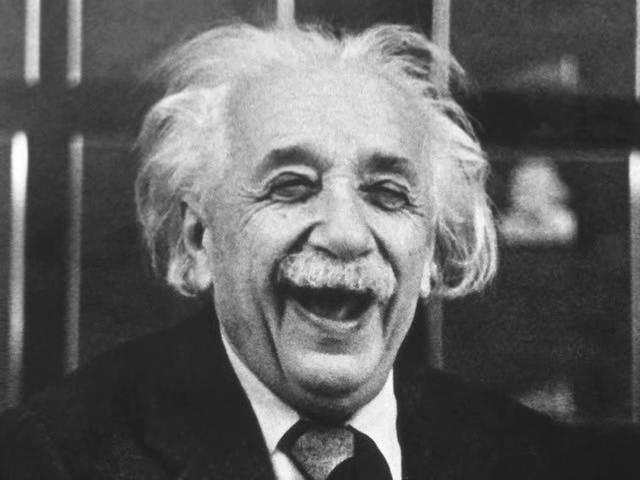
“Put your hand on a hot stove for a minute and it seems like an hour. Sit with a pretty girl for an hour, and it seems like a minute. That’s relativity”
Continue reading “Einstein: The Father of Behavioral Economics”
 Intersections