
Sam Hinkie’s resignation from 76ers GM via 13 page manifesto in 2016 didn’t lack for style (or for burying the lede, which he announced at the end of the first page). In the letter he explains to shareholders his philosophy on basketball and on life, citing a diverse group of business icons, scholars, and other luminaries, including: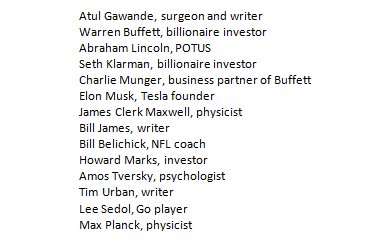
(h/t @Tomhaberstroh)
The letter provides a fascinating look into a brilliant man who, in his own words, zigged while his competitors comfortably zagged. Among other nuggets, the resignation argues that decision makers should be evaluated based on the judgements informing their decisions, rather than on the outcomes of the decisions.
The outcomes of any decisions, however, depend in part on how the relevant stakeholders (e.g. owners, players, fans) are likely to react to them. Anticipating these reactions can improve one’s chances of a successful outcome. Hinkie’s judgment may have been sound, but he overlooked certain elements of human nature, which ultimately doomed him.
No matter what they may say, people want no part of rooting for a team to be horrible this year so that it can compete for a championship in five years. That is no one’s idea of fun.
What Do We Want? Instant Gratification! When Do We Want It? Now!
Studies estimate that people hate losing anywhere from 1.5 to 5 times as much as we like winning. The most commonly cited number is two. That would mean that for every loss 76ers fans endured over the past few years, they would need to win two games just to be “even.”
Furthermore, the concept of time discounting describes how people place a lower value on future goods than on present goods. If someone asks you whether you would prefer to have $100 in one year or $100 today, the money today is almost always more valuable. All things equal, a win today is worth more than a win in a year, and trading wins today for the promise of wins in the future will usually be a losing proposition from a fan’s perspective (especially when the future wins are uncertain).
The 76ers owners, on the other hand, claimed to be bought into this approach, which is why Hinkie was hired in the first place. However, when people evaluate what their preferences are likely to be in the future, they often come to very different conclusions than they do when evaluating their preferences right now. Next week, I would prefer to eat an apple to a candy bar as a snack because it is more likely to lead to long-term health, but if they are both placed in front of me this instant, all of a sudden the candy bar looks more attractive than the apple. People are bad at predicting that their preferences are likely to change in this way. We underestimate just how willing we are to sacrifice long-term goals for instant gratification.
Owners of sports teams are not immune. 76ers owners initially felt that losses in the near future were worth exchanging for wins in the far future. Once they experienced firsthand the pathetic product the 76ers trotted out on a nightly basis, however, they became disgruntled. This manifested in them giving additional people oversight into the team-building process, which many speculate led to Hinkie’s resignation.
Was Sam Hinkie Stinky?
When Sam Hinkie “resigned,” he left at the absolute lowest point, so he can conceivably claim credit for the subsequent improvements in the team. He was responsible for the picks that became Ben Simmons and Joel Embiid, as well as the pick that ultimately would have become Jayson Tatum (had 76ers management not traded it + a pick for Markelle Fultz). Many today concede that his approach “worked” to an extent. The 76ers are one of the most exciting teams in basketball.
However, he’s no longer calling the shots, because he either wasn’t aware of how grating this approach would be to fans or owners, or didn’t care. Perhaps he will learn the value of anticipating stakeholder reactions and rise, like a phoenix (or a Belichick), to the helm of some equally progressive team and lead them to a championship. Personally, I find his unorthodox approach fascinating, and hope he gets to take another shot.
 Intersections